Marketplace Guides
JD.com API for E-commerce: Products, Dropshipping, and Integration
Integrate JD.com product data into your e-commerce platform with API. Access product information, prices, images, variants, and more with Setalabs.
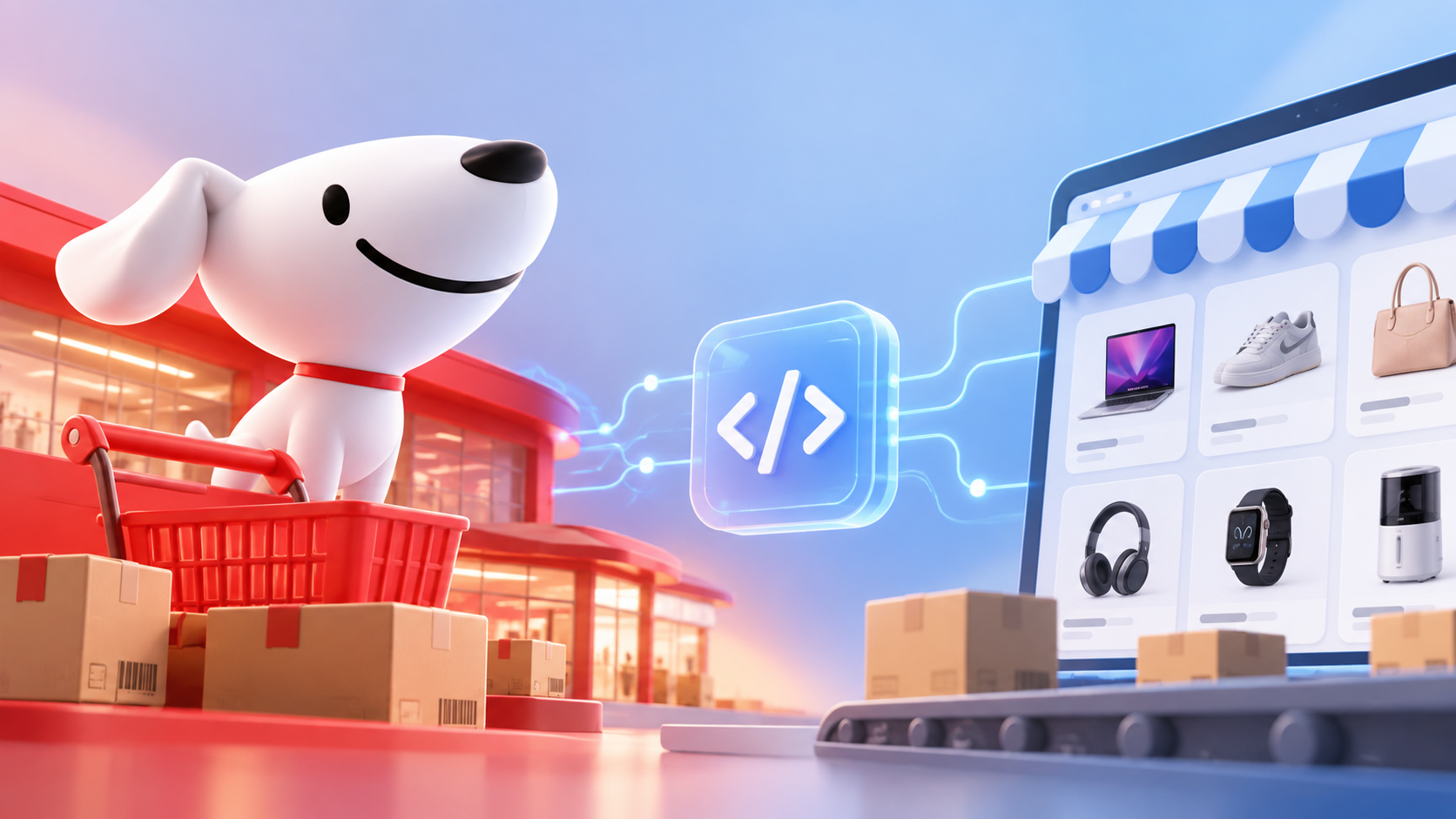
JD.com is one of China’s largest online marketplaces and a major e-commerce platform offering a wide range of electronics, home appliances, clothing, home goods, cosmetics, and products across many other categories.
For online stores and e-commerce services, JD can be used not only as a shopping platform but also as a source of products and product data. Information from the marketplace can be used to build an online store catalog, work with suppliers, and support dropshipping business models.
When working with a small number of products, catalog management can be handled manually. However, as the product range grows, businesses need to regularly retrieve up-to-date prices, specifications, images, variants, and other information. API integration can automate these processes.
What Is JD.com?
JD.com, also known as Jingdong (京东), is a Chinese e-commerce platform founded in 1998. The company initially specialized in electronics and later developed into a large general-purpose online marketplace.
Today, JD offers products across numerous categories, including electronics and gadgets, home appliances, clothing and footwear, cosmetics, home goods, automotive products, and much more.
One of JD’s key features is its extensive logistics infrastructure. The company has invested heavily in warehouses, automation, and delivery technologies, allowing it to control a significant part of the order fulfillment process.
Another important feature of the platform is its large selection of branded products. This makes JD an interesting product source for e-commerce projects working with the Chinese market and looking to expand their catalogs with products from Chinese and international manufacturers.
JD.com as a Product Source for Online Stores
JD’s product range can be used to build an online store or a specialized product catalog.
In this model, products from the marketplace serve as the source for the store’s own catalog. The store selects the required products, retrieves their information, and publishes it on its own platform.
Depending on the project, the following product data may be required:
product names and descriptions;
images;
specifications;
categories;
product variants;
prices;
seller information;
other available product data.
If a catalog contains only a few dozen products, some of this work can be done manually. However, when working with thousands or tens of thousands of products, manual data transfer becomes too time-consuming.
In addition to the initial import, changes to the source data must also be taken into account. Product prices may change, sellers may update specifications or images, and individual product variants may become unavailable.
For large product catalogs, automation therefore becomes essential.
Dropshipping with JD.com
JD can also be used as a product source for projects operating under a dropshipping model.
With this model, an online store does not necessarily need to purchase its entire inventory in advance or keep products in its own warehouse. Products are published in the store’s catalog, while purchasing and further order fulfillment are arranged after a customer places an order.
This makes it possible to build large catalogs and test different product categories without purchasing every item in advance.
However, keeping product information up to date is particularly important for dropshipping.
An online store needs to regularly check prices and other product information on the source marketplace. When this data is transferred manually, maintaining a large catalog becomes increasingly difficult.
An API can automate a significant part of this process.
Why Does an Online Store Need the JD API?
An API provides programmatic access to marketplace data. Instead of manually opening product pages and transferring information, an online store application can automatically send requests and receive structured data.
For example, an integration can be used to search for products and retrieve available information about specific items.
The received data can then be transformed into the format required by the store’s own system and used to create product pages.
A typical workflow looks like this:
JD.com → API → Data Processing → Online Store Catalog
After the initial import, the API can also be used to retrieve product information again. This makes it possible to organize periodic catalog updates and reduce the amount of manual work required.
This approach is especially useful for online stores, product aggregators, purchasing services, dropshipping platforms, and other projects that need to work with large numbers of JD products.
Challenges of JD Integration
Working with Chinese marketplaces comes with several challenges.
First, it is necessary to ensure stable access to product data. Response formats and data structures may vary depending on product categories and product types.
An online store also needs to determine how JD categories, specifications, and product variants should be mapped to its own catalog structure.
When working with large numbers of products, integration performance also becomes important. Applications need to manage request volumes, handle errors and retries, cache data, and regularly update product information.
Another challenge is maintaining the integration itself. If the data source or the mechanism used to retrieve information changes, a custom integration may need to be adapted accordingly.
As a result, developing and maintaining a direct integration can require significant development resources.
JD Integration with Setalabs
Setalabs provides APIs for accessing data from popular online marketplaces, including JD.
Instead of developing and maintaining a separate mechanism for each data source, developers can use the Setalabs API as a unified integration layer between the marketplace and their application.
With Setalabs, JD data can be used in a variety of e-commerce solutions, including:
online stores;
dropshipping platforms;
product search and comparison services;
procurement systems;
product aggregators;
internal business systems;
mobile applications.
An application sends a request to the Setalabs API, receives structured data, and then processes it according to its own business logic.
This allows developers to focus on building their product instead of developing and continuously maintaining a separate marketplace integration.
JD.com can be a valuable data source for e-commerce projects thanks to its extensive product range and its position within China’s e-commerce ecosystem.
For small catalogs, products can be added manually, but this approach becomes difficult to scale as the number of products increases. Product information needs to be retrieved regularly, changes need to be monitored, and the store’s own catalog needs to be kept up to date.
APIs make it possible to automate these processes.
With Setalabs, developers and e-commerce businesses can connect JD as a source of product data and use this information in online stores, dropshipping services, product aggregators, and other applications.