Marketplace Guides
Poizon and Dewu: Exploring the Chinese Marketplace and Its API Capabilities
Discover Poizon and Dewu, explore their differences, product authentication, and learn how to integrate marketplace product data using Setalabs API.
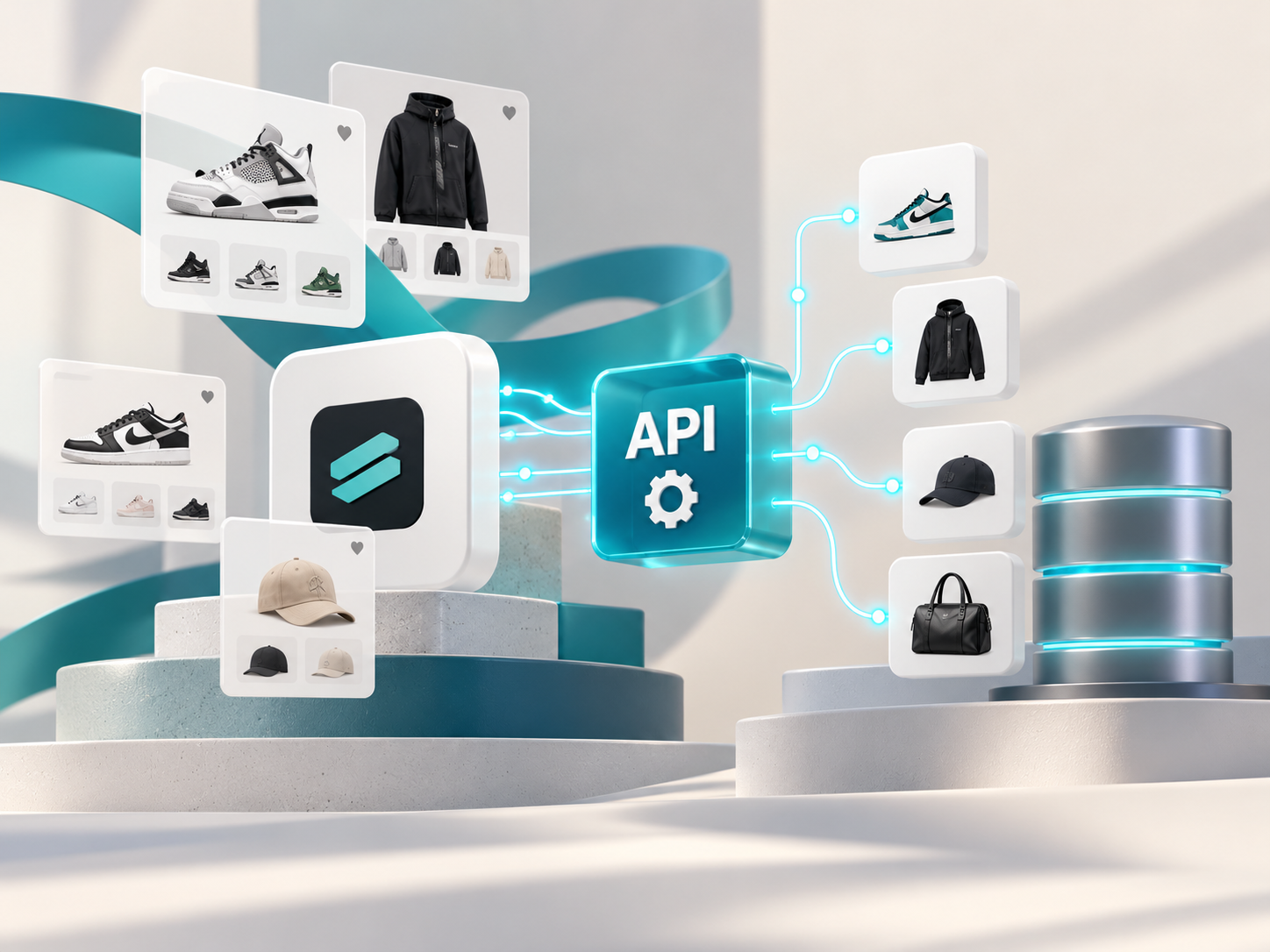
Poizon has become a popular Chinese marketplace for purchasing authentic sneakers, branded clothing, and accessories. The platform offers both the latest collections from well-known manufacturers and rare models that can be difficult to find in traditional retail stores. One of its distinguishing features is a product authentication system designed to reduce the risk of purchasing counterfeit goods.
In China, the platform is known as Dewu (得物), while the Poizon brand is used for its international operations. Although both services belong to the same ecosystem, they differ in product selection, pricing, and purchasing conditions.
For online retailers and other e-commerce businesses, Poizon and Dewu can serve as valuable sources of branded products and up-to-date product information. The Poizon (Dewu) API enables businesses to automate product data retrieval, import products into their own catalogs, and monitor changes in prices and availability.
What Is Poizon?
Poizon is an online marketplace primarily focused on branded products in the fashion, streetwear, and lifestyle categories.
The platform has gained popularity among customers looking for authentic sneakers, sportswear, designer accessories, and limited-edition collections.
Its catalog features products from internationally recognized brands, including Nike, Adidas, Jordan, New Balance, Puma, Converse, and many others.
In addition to footwear, the marketplace offers clothing, bags, watches, accessories, and collectible items.
What sets Poizon apart from traditional online stores is its approach to product verification. The platform operates its own authentication system designed to identify counterfeit products.
This is particularly important for customers purchasing branded goods, as popular sneaker models and designer items are frequently targeted by counterfeit manufacturers.
What Is Dewu and How Is It Related to Poizon?
Dewu (得物) is the Chinese name of the platform internationally known as Poizon.
Essentially, these are related services within the same ecosystem, designed for different audiences.
Dewu primarily serves the domestic Chinese market. Its interface is designed for Chinese-speaking users, and purchases typically involve local payment methods and delivery within China.
Poizon is the platform's international brand, targeting customers outside China. The international version offers an English-language interface and services adapted to supported overseas markets.
However, the differences between the two services go beyond language. Product selection, prices, availability, payment options, and shipping conditions may vary.
Key Differences Between Poizon and Dewu
Feature | Dewu | Poizon |
|---|---|---|
Primary market | China | International markets |
Interface language | Chinese | English |
Main currency | Chinese yuan (CNY) | Depends on the market |
Shipping | Primarily within China | Supported international destinations |
Payment methods | Chinese payment systems | Market-specific payment options |
Product selection | Products available in China | International product offerings |
For entrepreneurs working with Chinese suppliers and logistics intermediaries, Dewu may be particularly interesting.
The Chinese version of the platform allows businesses to explore domestic market offerings, discover products, and compare prices.
However, selling these products internationally requires separate arrangements for purchasing, payments, and shipping.
How Does Poizon Authenticate Products?
One of Poizon's main advantages is its product authentication system.
The platform uses an authentication process in which specialists examine products before they are shipped to customers.
Depending on the product category, verification may include examining materials, manufacturing quality, labels, packaging, and other indicators of authenticity.
Additional technological verification methods may also be used for certain products.
After successfully passing authentication, a product may receive a special identification tag or another form of verification.
This approach helps reduce the risk of purchasing counterfeit goods, which is particularly important when buying expensive sneakers and designer accessories.
However, even a multi-stage authentication process cannot guarantee that errors will never occur. Businesses should consider the platform's policies, return conditions, and potential disputes when organizing their operations.
Why Are Poizon and Dewu Interesting for E-commerce Businesses?
Poizon and Dewu can serve as product sources for online stores specializing in branded footwear, clothing, and accessories.
Several features make these platforms particularly attractive.
Extensive selection of branded products. The marketplace offers numerous models from well-known manufacturers, including products that may be difficult to find in traditional retail stores.
Limited-edition collections. The platform features rare sneaker models and other collectible items that can be valuable additions to specialized online stores.
Chinese market offerings. Prices on Dewu may differ from those of similar products in other countries. This creates potential resale opportunities, although actual profitability depends on shipping costs, commissions, taxes, and other expenses.
Product authentication. The verification system makes the platform more attractive to customers who value the authenticity of branded products.
At the same time, prices for collectible items can fluctuate significantly depending on demand, size, condition, and availability.
For this reason, businesses need access to up-to-date product information and the ability to regularly update their catalogs.
Poizon (Dewu) API: How to Use Marketplace Data in Your Own Project
Managing products from Poizon has its own challenges. A single sneaker model may be available in dozens of sizes, with prices and availability varying significantly between them. For online stores selling branded footwear, these differences are important when building product catalogs and calculating retail prices.
Retrieving this information manually is inefficient, especially for stores managing large assortments and frequently updating their product offerings. The Poizon (Dewu) API helps solve this problem by providing automated access to marketplace product data.
Using the API, developers can implement product search, retrieve images, specifications, sizes, and pricing information, and use this data to build custom product catalogs.
For example, an online sneaker store can automatically create product listings for Nike or New Balance models, display available sizes, and calculate retail prices based on its own markup rules.
To connect to the Poizon API, businesses can use the Setalabs platform. Setalabs provides access to marketplace product data through an API, allowing developers to integrate it into online stores, mobile applications, and specialized e-commerce services without having to build and maintain their own marketplace data retrieval infrastructure.
This type of integration is useful not only for footwear retailers. Poizon product data can also be used to develop price comparison services, specialized catalogs of branded products, and applications for discovering rare sneaker models.
It is important to note that the API is designed for retrieving product information, while purchasing, payments, and shipping must be handled separately.
The Poizon (Dewu) API makes it possible to use the Chinese marketplace as a product data source for custom e-commerce projects, while Setalabs simplifies the technical aspects of integration.